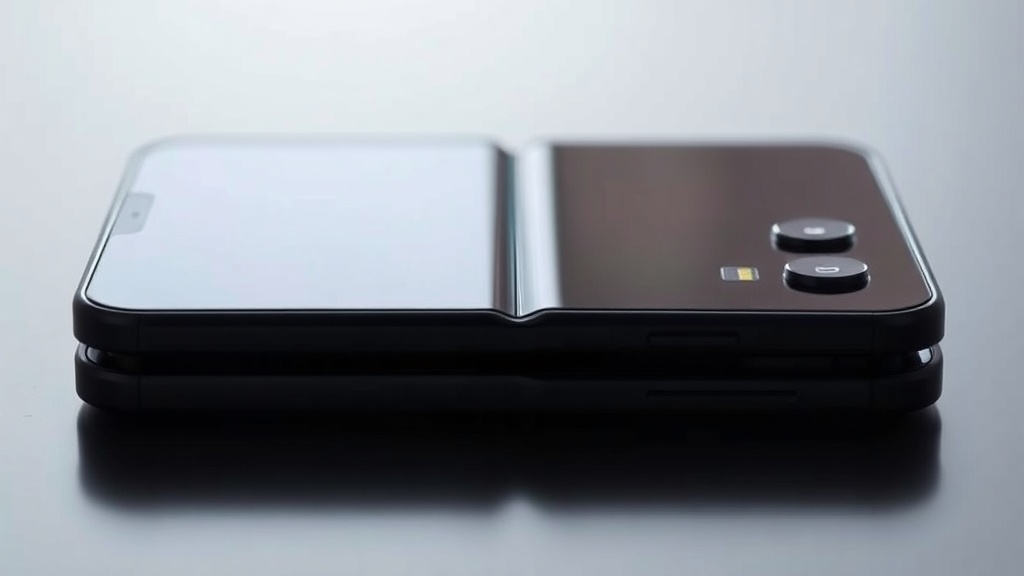
Foldable Phones in 2026: The Honest Truth About Living with a Crease

You probably think foldable phones are still just expensive toys for people who want to look like they're living in a sci-fi movie. There's this persistent idea that if you breathe on the screen too hard, it'll shatter, or that the hinge will start sounding like a bag of potato chips after six months. I've spent years reviewing these things from my desk here in Toronto, and I'm telling you: that's just not the reality anymore. We've moved past the "beta test" phase of foldables. This post covers why these devices are actually practical tools for getting things done on the go and why the hardware is finally catching up to the marketing hype.
Most people don't realize how much the standard "candy bar" phone has peaked. Whether you buy an iPhone or a high-end Android, they all feel the same now. They're slabs of glass that are slightly too big for one-handed use but too small for real work. Foldables change that dynamic by giving you a choice (and choices are rare in tech these days). You can have a normal-sized phone for quick texts and a mini-tablet for when you need to actually see what's happening in a spreadsheet or a video call. It's a shift in how we interact with our digital lives, moving away from the "one size fits all" mentality that has dominated the last decade.
Are foldable phones durable enough for daily use now?
This is the biggest hurdle for most buyers. We've all seen those early videos where screens failed after a few hundred folds. But the 2026 crop of foldables is a different breed. Companies like Samsung and OnePlus have started using improved Ultra Thin Glass (UTG) and reinforced hinges that are rated for over 200,000 folds—that's about five years of heavy use. Living here in Toronto, we also have to worry about the cold. If you've ever tried to use a first-gen foldable in -20 degree weather, you know the screen could get brittle. Modern materials have mostly solved this, though I still wouldn't recommend leaving your phone in a snowbank. The hinges are also much better at keeping dust out, using tiny "brushes" inside the mechanism to sweep away pocket lint before it can cause a crunch. Check out Android Authority's durability tests for the nitty-gritty details on how these hinges hold up under pressure.
Is the screen crease really a deal-breaker?
Let's be honest: the crease is there. If you look at the screen from an angle under a bright light, you're going to see a slight dip where the glass folds. But here's the thing about our brains—they're incredibly good at filtering out repetitive visual noise. Within forty-eight hours of using a device like the Z Fold 6 or the OnePlus Open, your eyes just stop seeing it. It becomes like the notch on an iPhone or the hole-punch camera on a Galaxy. You only notice it when you're looking for it. Tactically, you might feel it when you swipe across the middle, but it's a minor trade-off for having double the screen real estate. Some manufacturers, particularly the Chinese brands like Oppo and Vivo, have almost completely eliminated the visible crease using a "waterdrop" hinge design that lets the screen fold into a wider curve. Samsung is still a bit behind on this, but they argue their tighter hinge makes for a thinner device overall.
Hardware is only half the battle. If the software doesn't know what to do with that extra space, you're just looking at a giant, stretched-out phone app. Thankfully, Android has finally figured this out. Google's work on Android 15 and 16 has made multitasking feel natural rather than forced. You can have two apps open side-by-side with a third floating in a window, and it doesn't feel like your phone is about to catch fire. This is where the productivity argument actually holds water. I've found myself being able to edit articles or manage my calendar much faster on a foldable than I ever could on a standard device. The taskbar at the bottom of the screen makes switching between apps feel more like using a laptop than a phone. It’s not just about "bigger is better"; it’s about making the space useful.
Which foldable phones are actually worth your money?
If you're looking to jump in, you have a few real contenders. The Samsung Galaxy Z Fold 6 remains the safe choice. It has the best software support and the most polished ecosystem, plus it's easier to find a repair shop if something does go wrong. However, the OnePlus Open has arguably better hardware, with a wider outer screen that feels like a normal phone when closed and a much less noticeable crease. Then there's the Pixel Fold, which focuses on Google's AI features and a shorter, wider aspect ratio that some people find more comfortable for reading. You should also consider the "Flip" style foldables if you want something that gets smaller rather than bigger. The Galaxy Z Flip 6 is a great choice for people who miss the days when phones actually fit in their pockets, though you lose out on the productivity benefits of the larger internal display.
I'm not going to sit here and tell you that a $2,000 phone is a bargain. It's not. But you have to look at what you're replacing. If a foldable allows you to stop carrying a tablet, or even a laptop on short trips, the math starts to look a little different. We're seeing more trade-in deals and financing options now that these phones have gone mainstream, which takes some of the sting out of the initial purchase. Plus, the resale value for foldables has finally stabilized. You're no longer losing 70% of the value the moment you walk out of the store. Still, you're paying a "new tech" tax. You're paying for the R&D that went into making glass bend without breaking. If you're the type of person who keeps their phone for five years, a flagship foldable is finally a viable option, but if you're on a budget, you're better off waiting another year or two for the cheaper versions to arrive.
Physics is a stubborn thing. When you have to fit a hinge and two screens into a device that still needs to be pocketable, something has to give. Usually, that's the cameras and the battery. Most foldables can't fit the massive sensors you'll find in the S24 Ultra or the iPhone 15 Pro Max because the phone's body is too thin when unfolded. You're still getting great photos—comparable to a standard flagship—but you won't have that 10x optical zoom or the absolute best low-light performance. Battery life is another area where you'll notice a difference. Driving a massive 7.6-inch screen takes a lot of juice, and most of these phones have smaller batteries than their non-folding counterparts to keep the weight down. You'll get through a full day, but you'll likely be reaching for the charger by 9 PM if you've been doing a lot of heavy lifting on the inner display. For a deeper dive into the latest specs, CNET's review of the Z Fold 6 breaks down the battery performance in real-world scenarios.
The era of the boring smartphone is ending. Whether you're ready for it or not, the slab is no longer the only way to do mobile tech. Foldables have proven they're more than just a passing trend. They're a response to our need for more space in a world that's increasingly mobile-first. I’ve lived with these devices through Toronto winters and long flights, and I can say that going back to a regular phone feels like a step backward. It’s not a perfect technology yet, but for those who want to see what’s next, the future is already here, and it’s surprisingly durable.