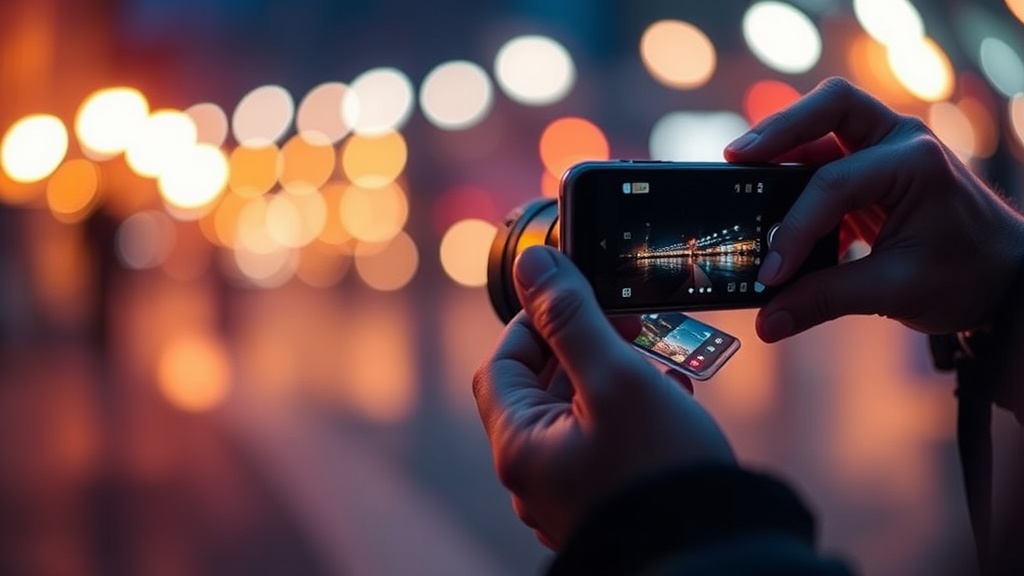
Is Your Smartphone Photography Kit Actually Worth the Investment?

Why do professional mobile photographers spend hundreds on accessories?
Can a smartphone really compete with a DSLR when you add the right gear? Most people think a camera is just a lens and a sensor, but in the mobile era, it is about the ecosystem of light, stability, and focal control. This post breaks down the hardware that actually changes your output versus the junk that just sits in your drawer. We are looking at the hardware reality of high-end mobile photography.
The jump from a standard handheld snapshot to a controlled shot often comes down to stability. Even the best computational photography in an iPhone or Pixel can't fix a shaky hand in low light. This is where the tripod moves from a luxury to a necessity. A high-quality mobile tripod isn't just a stand; it is a way to ensure your long-exposure shots don't look like a blurry mess. If you are trying to capture the stars or a slow-moving waterfall, handheld is simply not an option.
What are the best mobile lenses for macro photography?
If you want to get close—and I mean really close—to the subject, a dedicated macro lens attachment is a different beast entirely. While modern phones have decent macro modes, a physical glass element provides a level of detail that software simulation struggles to replicate. Brands like Moment or Sandmarc offer lenses that clip directly over your existing optics. These aren't cheap, but they change the way you see textures and minute details in nature or product shots.
When you attach a lens, you are essentially adding a layer of physical glass to a digital process. This helps with edge-to-edge sharpness. However, be warned: you need a way to hold the phone steady while using these. Trying to balance a phone with a heavy lens attachment on a single point of contact is a recipe for a cracked screen. Always check the weight rating of your accessories before you commit to a setup.
Does a mobile lighting rig change the shot quality?
Light is everything. You can have the most expensive sensor in the world, but if the lighting is flat, your photo will be flat. This is where portable LED panels and ring lights come into play. For those doing product photography or even portraits, a small, battery-powered light source provides direction and depth. It's about controlling shadows, not just brightness.
I often see creators relying solely on the built-in flash. That is a mistake. The built-in flash is harsh and tends to flatten features, making everything look artificial. A dedicated light source allows you to control the angle of the light, which creates the shadows necessary for three-dimensional depth. You can find excellent-rated lighting gear through specialized retailers like B&H Photo, which remains a standard for tech enthusiasts.
| Accessory Type | Primary Benefit | Difficulty Level |
|---|---|---|
| Tripod/Gimbal | Stability & Long Exposure | Low |
| Macro Lens | Detail & Texture | Medium |
| LED Light Panel | Shadow Control & Depth | Medium |
| ND Filter | Motion Blur Control | High |
Using an ND (Neutral Density) filter is perhaps the most advanced move a mobile photographer can make. These are essentially sunglasses for your camera. They reduce the amount of light entering the lens, allowing you to use slower shutter speeds even in bright daylight. This is how you get those silky smooth water effects or motion-blurred clouds. Without an ND filter, your phone's software will try to compensate, often resulting in an overexposed, messy image.
The cost of entry for a serious mobile kit can climb quickly. You might think a $20 clip-on lens from a generic site is enough, but the glass quality is usually poor, leading to vignetting and softness. If you are serious about the craft, look at specialized optical companies. You can see the technical specifications and real-world testing for many of these glass elements on sites like GSMArena to ensure they actually fit your specific device model.
One thing to keep in mind is the physical footprint. A large gimbal might be great for video, but it's a pain to carry if you're just walking through a city. I recommend starting with a lightweight tripod and a single high-quality light source. Once you master how to position yourself in relation to the light, the hardware becomes much easier to manage. The goal is to let the gear work for you, not to become a slave to a heavy bag of accessories.